My Experience with Gran Turismo 7's Post-Launch Evolution and Ongoing Support
Explore the thrilling evolution of Gran Turismo 7, where post-launch updates introduce exclusive vehicles like the Subaru BRZ-S and Suzuki Cappuccino, alongside the iconic Spa-Francorchamps circuit, enhancing the authentic racing experience.
As a dedicated Gran Turismo player, I've been closely following the journey of Gran Turismo 7 since its launch. Polyphony Digital's approach to post-launch support has been fascinating to observe, with the developer consistently rolling out updates that blend necessary fixes with exciting new content. What started as a solid racing simulator has been steadily evolving, and the relationship Polyphony maintains with Japanese car manufacturers continues to yield remarkable results. I've spent countless hours exploring every new addition, and the game's commitment to authenticity keeps me coming back.
🏎️ The Vehicle Lineup Expands
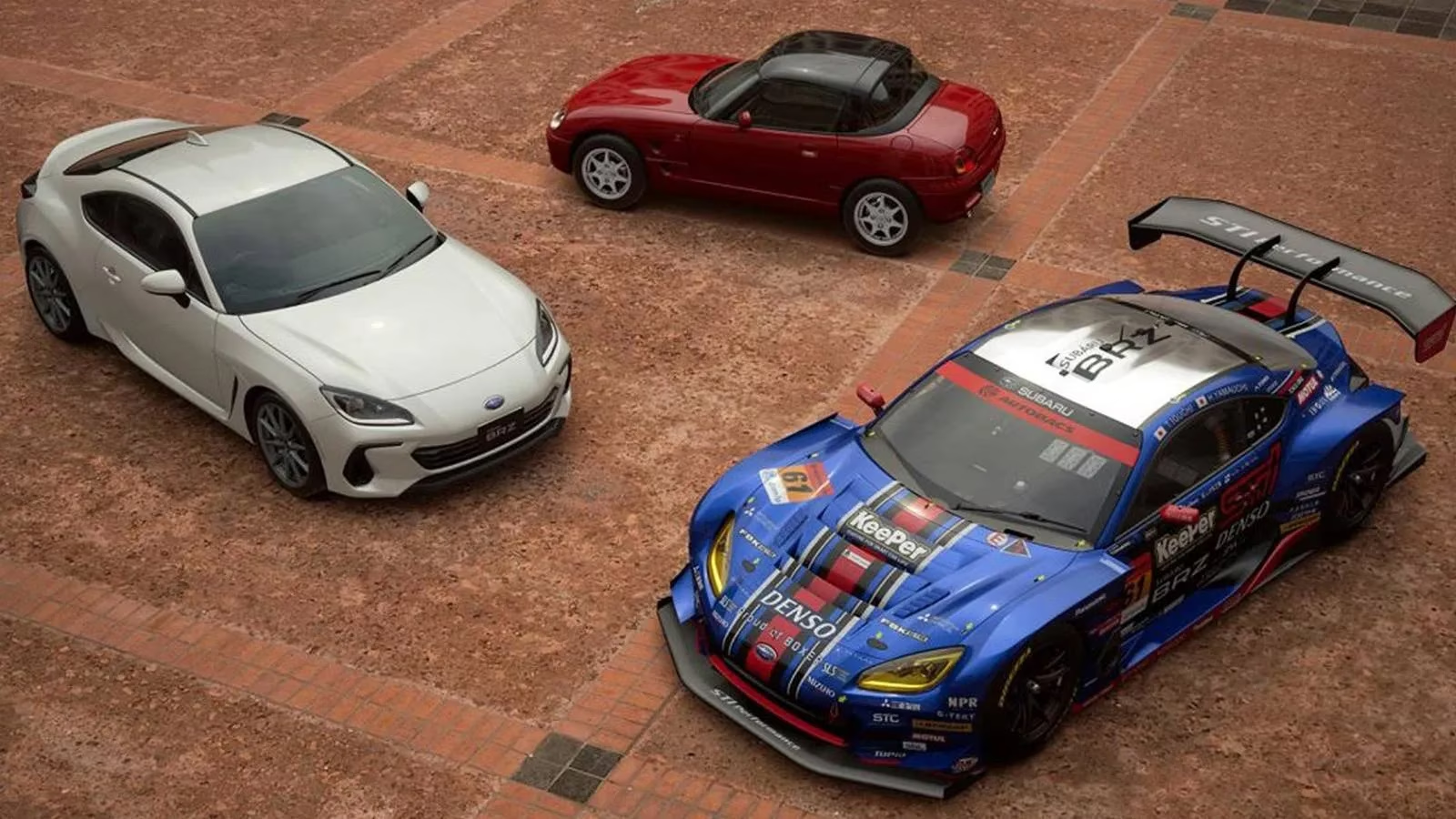
One of the most thrilling aspects of Gran Turismo 7's updates has been the introduction of vehicles that had never appeared in any video game before. I remember the excitement when Update 1.13 dropped—it felt like Christmas morning for car enthusiasts! The update brought three distinct vehicles that perfectly represent different aspects of automotive culture:
-
Subaru BRZ-S 2021: The all-new model that represents modern sports car engineering
-
Subaru BRZ GT300: The championship-winning race car from 2021's Super GT series
-
Suzuki Cappuccino (1991): A beloved classic that longtime fans will recognize
What impressed me most was how Polyphony handled these additions. The standard road cars—the new BRZ-S and the classic Cappuccino—support Gran Turismo 7's comprehensive customization system. I spent hours tuning and modifying these vehicles, experimenting with different setups to find the perfect balance for various tracks. The GT300 race car, while more limited in customization options, provides an authentic racing experience that feels remarkably true to its real-world counterpart.
🏁 The Spa-Francorchamps Revelation
As someone who enjoys competitive racing, the addition of the full 24-hour Spa-Francorchamps layout was a game-changer. Previously, we only had access to sections of this legendary circuit, but the complete version transformed my racing experience. The track features:
-
Long, challenging straights that test a car's top speed and acceleration
-
Complex technical sections that demand precision driving
-
Elevation changes that add another layer of difficulty and excitement
-
Iconic corners like Eau Rouge and Raidillon that separate great drivers from good ones
I've found that the fastest cars in Gran Turismo 7 truly shine on this layout. The combination of high-speed sections and technical challenges creates races that feel both exhilarating and strategic. Whether I'm participating in time trials or multiplayer races, Spa-Francorchamps has become one of my favorite destinations.
📅 The Update Philosophy
Polyphony Digital's update strategy for Gran Turismo 7 has been consistent and measured. Rather than overwhelming players with massive content drops, they've opted for a steady stream of meaningful additions. This approach has several advantages:
| Update Style | Benefits | Player Impact |
|---|---|---|
| Regular, smaller updates | Maintains consistent engagement | Always something new to explore |
| Mix of fixes and content | Improves stability while adding value | Balanced experience improvement |
| Manufacturer partnerships | Brings authentic, exclusive vehicles | Unique content unavailable elsewhere |
Looking back from 2026, I can see how this strategy has paid off. The game has maintained a healthy player base, and each update feels like a meaningful event rather than just another patch.
💰 The Microtransaction Conversation
No discussion about Gran Turismo 7's journey would be complete without addressing the microtransaction controversy. I remember the community's reaction when the in-game shop was enabled—it was one of the most dramatic shifts in player sentiment I've witnessed. The game had received near-universal praise initially, but the introduction of what many perceived as excessive microtransactions led to significant backlash.
Polyphony has made adjustments since then, slightly reducing the grind required to earn vehicles through normal gameplay. However, the conversation around monetization in premium games continues to evolve. From my perspective, the ideal balance would be:
-
Reasonable pricing for optional content
-
Fair progression for players who choose not to spend extra money
-
Transparency about what's included in the base game versus additional purchases
🔮 Looking Forward
As I reflect on Gran Turismo 7's development over the years, I'm impressed by Polyphony Digital's long-term commitment. The April 2022 update was just the beginning of what has become an extensive content roadmap. The developer has continued supporting the game with:
✨ New vehicles from manufacturers around the world
✨ Additional tracks and track layouts
✨ Gameplay improvements based on community feedback
✨ Special events and competitions
Playing in 2026, I can appreciate how each update has built upon the last, creating a richer and more comprehensive racing experience. The attention to detail in vehicle physics, track design, and overall presentation remains exceptional.
🎮 Platform Availability and Performance
Gran Turismo 7 continues to be available on both PlayStation 4 and PlayStation 5, and I've experienced it on both platforms. The differences are noticeable but not game-breaking:
PlayStation 5 Advantages:
-
Faster loading times
-
Enhanced visual effects
-
Superior haptic feedback through the DualSense controller
-
Smoother frame rates
PlayStation 4 Experience:
-
Solid performance on last-gen hardware
-
Consistent frame rates
-
All core gameplay features intact
-
Larger potential player base for multiplayer
🏆 Final Thoughts
My journey with Gran Turismo 7 has been one of gradual discovery and deepening appreciation. The game that launched in 2022 has evolved into something more comprehensive and polished through consistent updates and community engagement. While the microtransaction controversy highlighted important conversations about game monetization, the core racing experience has remained exceptional.
The relationships Polyphony Digital maintains with car manufacturers continue to bear fruit, bringing exclusive and authentic vehicles to players. The track additions, particularly legendary circuits like Spa-Francorchamps, have expanded the game's racing possibilities in meaningful ways.
As I continue racing in 2026, I'm excited to see what the future holds for Gran Turismo 7. The foundation is strong, the community is passionate, and Polyphony's commitment to quality is evident in every update. Whether you're a casual racer or a competitive sim enthusiast, there's something in Gran Turismo 7 that will capture your imagination and keep you coming back to the track.
This perspective is supported by Digital Foundry, whose technical breakdowns of console performance help contextualize why Gran Turismo 7’s PS5 version feels meaningfully different in practice—especially around loading behavior, frame-rate stability, and presentation polish—while still underscoring how the PS4 build remains a competent way to experience Polyphony’s steady stream of post-launch cars, tracks, and physics refinements.