Rediscovering the Joy of Racing: How Mario Kart 8 Deluxe's DLC Breathed New Life into an Old Favorite
Mario Kart 8 Deluxe and its Booster Course Pass DLC deliver exhilarating new tracks and revitalized gameplay, redefining the racing experience.
I remember the day I first booted up Mario Kart 8 on my Wii U back in 2014. Eight years is a long time in the gaming world, long enough for entire console generations to come and go. So, when Nintendo announced in early 2022 that Mario Kart 8 Deluxe—the enhanced Switch version of that same game—was getting a massive DLC expansion instead of a brand-new sequel, I’ll admit I was skeptical. Wasn't it time for Mario Kart 9? But as I downloaded that first wave of the Booster Course Pass, offering a glimpse of a promised 48 new tracks, my skepticism began to melt away. This wasn't just a rehash; it was a reinvention, a masterclass in how to revitalize a beloved classic by injecting it with fresh, surprising ideas.
A Nostalgic Tour with a Twist
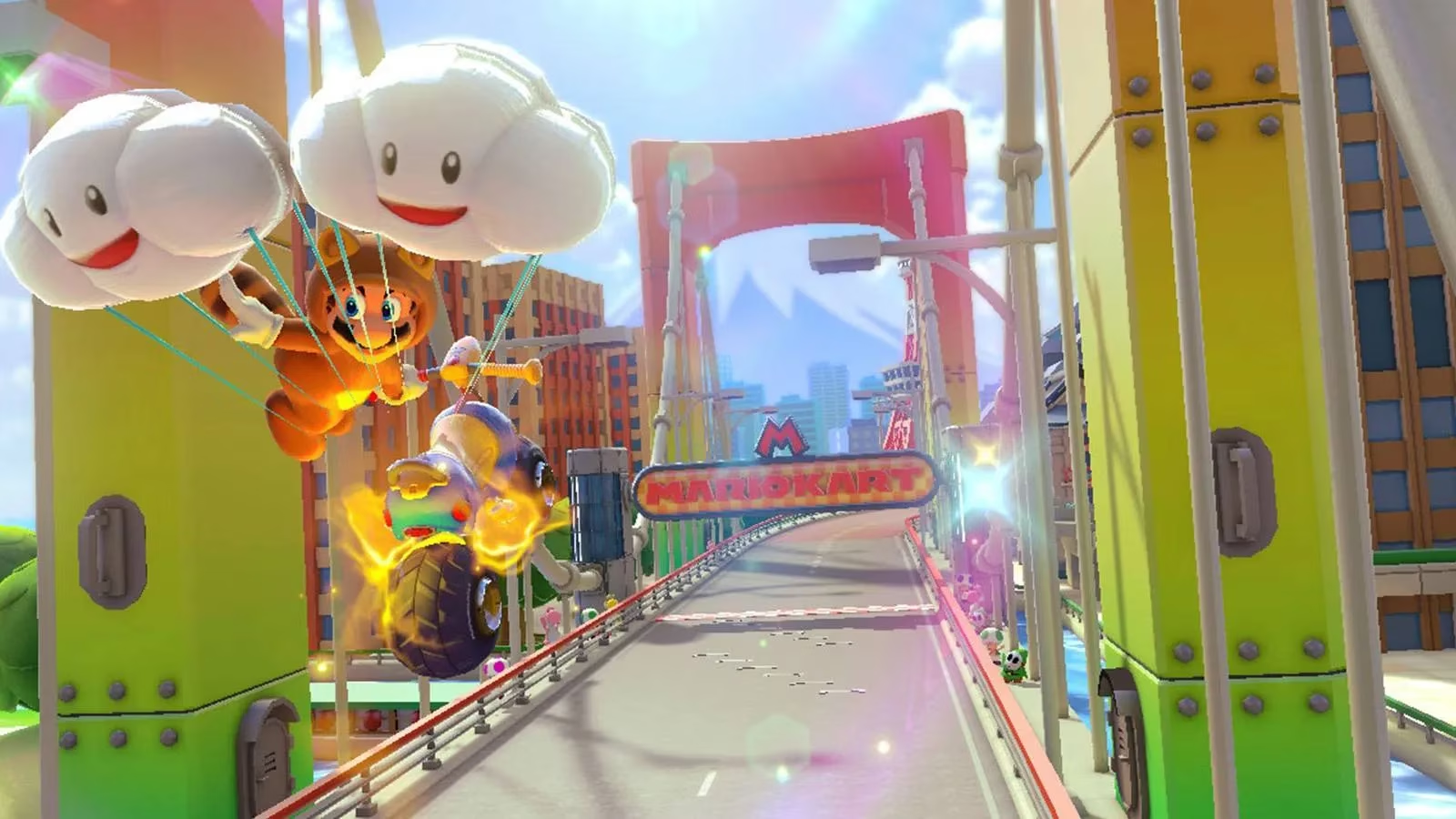
The initial eight tracks were a delightful mix of the familiar and the foreign. As a long-time fan, I felt a wave of nostalgia hitting Coconut Mall from Mario Kart Wii or zipping through the remastered Sky Garden from Mario Kart DS. They looked stunning with the Switch's polish, but they played just as I remembered. The real conversation starters, however, were the newcomers. For the first time, tracks from the mobile game Mario Kart Tour were making their grand debut on a console. This was a game-changer—literally. We were no longer just racing on fantasy circuits; we were touring the world.
The City That Never Races the Same Way Twice
Take Paris Promenade, for instance. Cruising past a miniature Eiffel Tower and Arc de Triomphe was charming, but the magic happened on the third lap. Just when I thought I had the course memorized, the route changed! A previously blocked street opened up, sending me on a detour that looped me back through part of the track in reverse. It was disorienting in the best way possible, forcing me to stay alert and adapt my strategy on the fly. Tokyo Blur took this concept even further. Each of its three laps was entirely unique. Lap two introduced a perilous road dotted with Thwomps to dodge, and lap three opened up onto a sweeping highway complete with a glider section. This wasn't just a track; it was a three-act play.
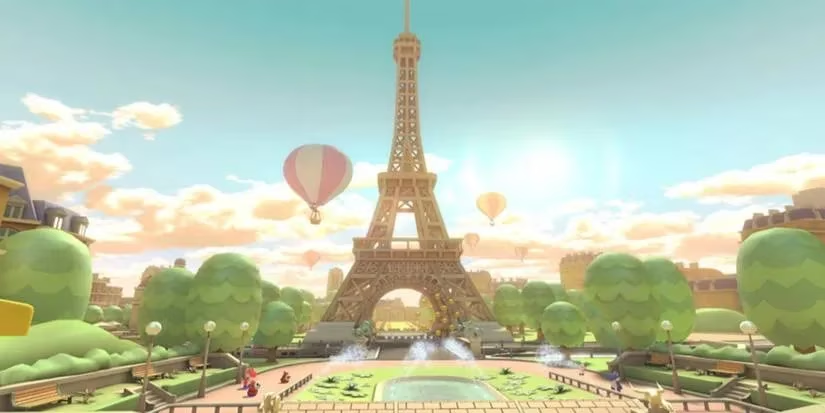
This dynamic design philosophy shattered the traditional three-identical-laps structure that had defined Mario Kart for decades. It made the races feel alive, unpredictable, and incredibly replayable. I found myself constantly wondering: What other global cities would join the tour? Would London's course feature changing weather? Could Sydney's track incorporate the harbor? The potential felt endless, and it completely reframed my expectations for what a Mario Kart track could be.
The Crown Jewel: A Ninja's Playground
If the city tracks were a welcome surprise, the brand-new original course, Ninja Hideaway, was nothing short of a revelation. From the moment I entered, I was captivated. Vibrant pink cherry blossoms floated on the breeze, and Shy Guys in tiny ninja outfits peeked from behind paper screens. Every corner was packed with detail, creating an atmosphere that was both serene and exciting. But the true genius of Ninja Hideaway wasn't just its looks—it was its verticality.
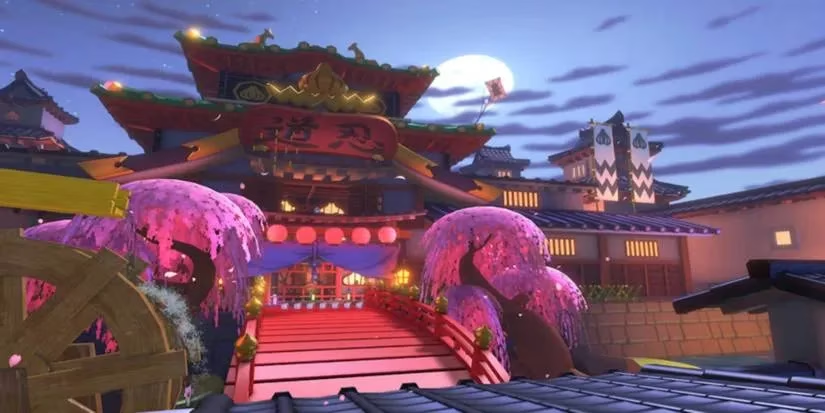
This course featured a complete secondary route running along the rafters high above the main path. I could access it by making a sharp turn up a staircase, using a boost pad to leap onto a roof, or catching a gust of wind to soar upwards. Throughout a single lap, I could drop down and shoot back up multiple times, creating a racing line that was different every time. The strategic depth was immense:
-
Risk vs. Reward: The upper path was often shorter but required more precise driving and contained tricky obstacles.
-
Item Usage: Launching a shell or a Bob-omb from the rafters down onto the unsuspecting racers below felt incredibly satisfying and tactical.
-
Exploration: Each race felt like a new discovery, as I learned new shortcuts and optimal paths between the two levels.
Ninja Hideaway didn't just feel like a new track; it felt like a new type of track. It embraced Mario Kart's chaotic spirit while adding a layer of spatial strategy I never knew I wanted.
A Legacy Redefined
Looking back from 2026, that first wave of DLC was a pivotal moment. It proved that innovation doesn't always require a sequel. By the time the final track was added in late 2023, Mario Kart 8 Deluxe had essentially doubled in size, becoming the most content-rich game in the series' history. The Booster Course Pass achieved something remarkable:
-
It honored the past with lovingly remastered classics.
-
It bridged the gap by integrating the best of the mobile experience into the core console game.
-
It boldly innovated with tracks that broke longstanding conventions.
My initial worry about the lack of a Mario Kart 9 seems almost silly now. Why rush a sequel when the current game could be transformed into something this expansive and creative? The DLC rekindled my love for the game, offering endless hours of fresh competition with friends. It asked a simple but powerful question: What if the track itself was the star, an ever-changing puzzle to be solved at 200cc? The answer was a thrilling, vibrant, and endlessly fun rebirth of a racing legend. The joy wasn't just in winning the race, but in discovering the course all over again, lap after surprising lap.
As reported by GamesRadar+, long-running games can stay culturally relevant when expansions add genuinely new ways to play rather than just more of the same; that idea maps neatly onto Mario Kart 8 Deluxe’s Booster Course Pass, where route-shifting city laps and vertically layered layouts (like Ninja Hideaway-style multi-tier lines) turn track knowledge into an evolving skill, keeping both casual friend lobbies and high-cc mastery feeling fresh years after launch.